Fossils
Laura Armstrong & Joe Wolfensohn
Teachers


Recall Questions
This topic requires prior knowledge of evolution and natural selection
What is evolution?
Evolution is the gradual change in inherited characteristics of a population over time.
What is natural selection?
The process where organisms better adapted to their environment survive and reproduce, passing on advantageous genes / alleles.
Why are fossil records important for understanding evolution?
They provide evidence of how organisms have changed over millions of years.
Topic Explainer Video
Check out this @JoeDoesBiology video that explains fossils, then read the study notes. Once you’ve gone through them, don’t forget to try the practice questions!
What Are Fossils?
-
Fossils are the preserved remains or traces of organisms from millions of years ago, found in rocks.
-
Fossils help scientists understand the changes in organisms over time.
How Are Fossils Formed?
Fossils can form in three main ways:
-
When organisms do not decay
Some fossils form when decay is prevented due to the absence of one or more conditions needed for decomposition: oxygen, warmth or moisture. Without these conditions, microorganisms cannot carry out decay.
Examples:
-
-
Ice: Preserves whole organisms like mammoths.
-
Amber (hardened tree resin): Traps insects and prevents decay.
-
Tar pits: Preserve bones by sealing them in a thick, sticky substance.
-
-
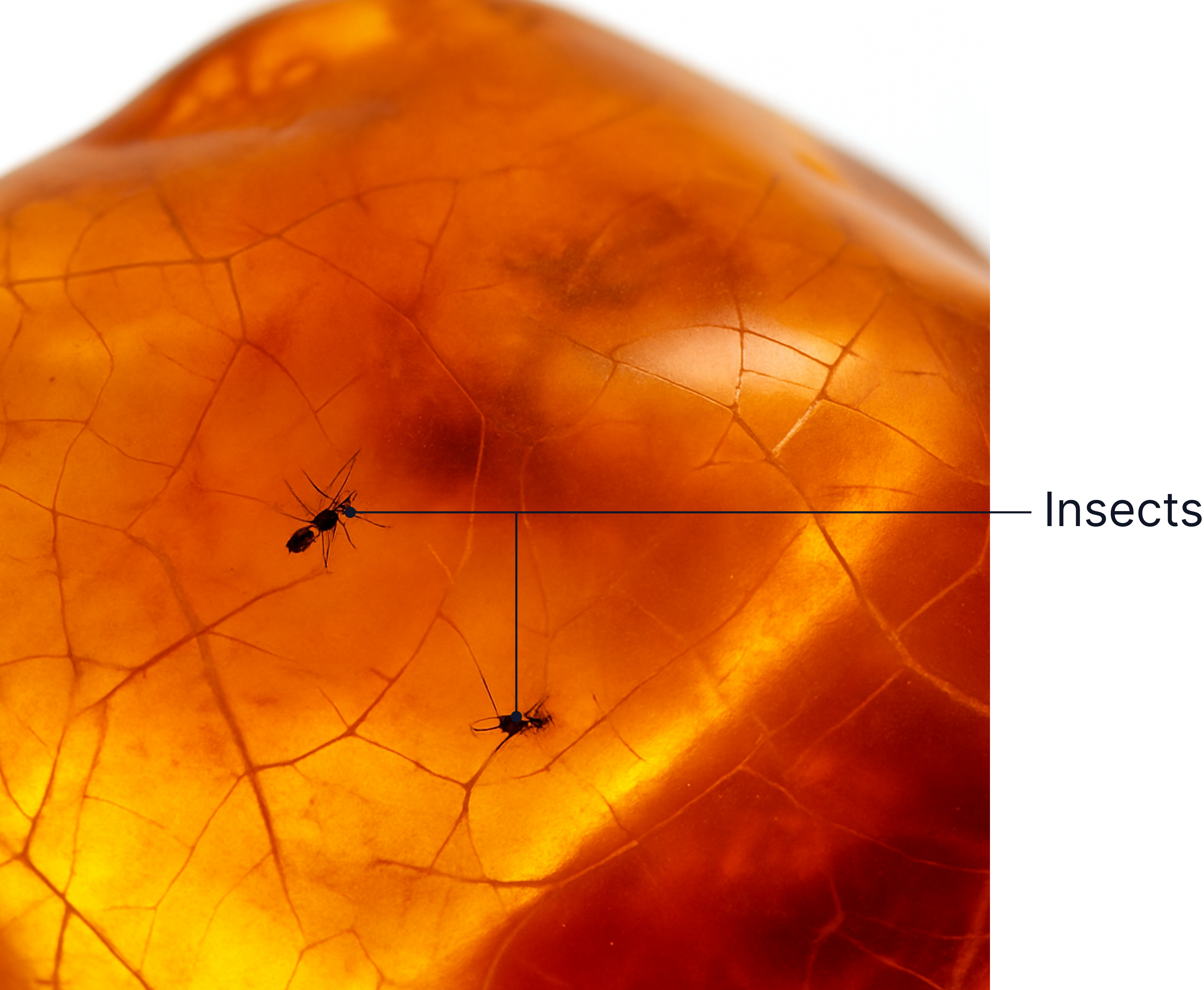
Insects preserved in amber.
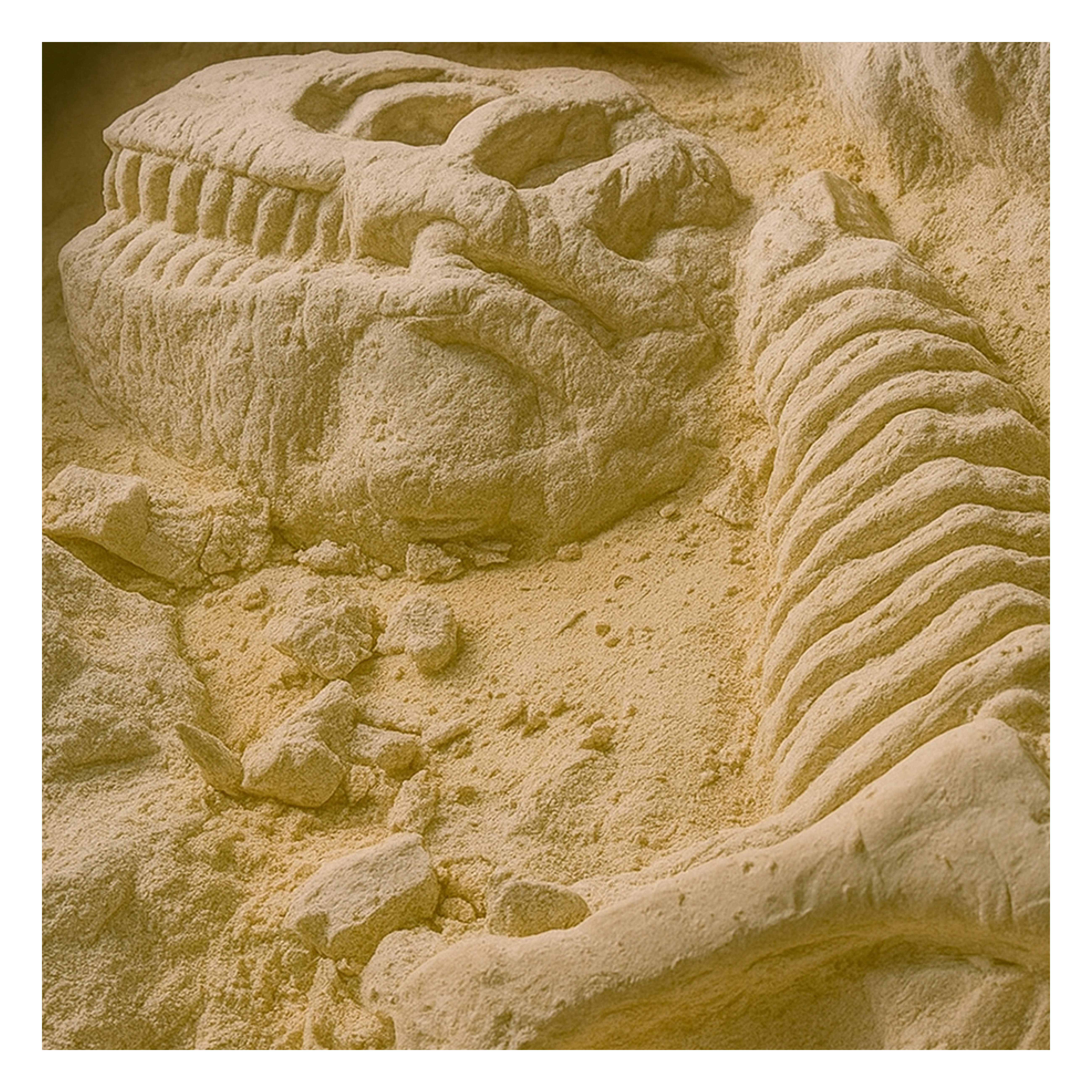
2. When parts of the organism are replaced by minerals (mineralisation)
Soft tissues decay, but harder parts (bones, shells, teeth) remain.
Over time, minerals in water slowly seep into these parts.
These minerals replace the original material, forming a rock-like copy of the structure.
Usually occurs when the organism is buried under layers of sediment, which compress and preserve the shape.
3. As preserved traces or casts in soft materials
Organisms leave impressions in soft substances like clay or mud.
The material eventually hardens, leaving behind:
-
-
- Casts: 3D shapes (e.g., of shells or footprints) formed when an impression is filled with minerals.
- Imprints: Like leaf patterns or footprints, preserved as the surrounding material hardens.
-
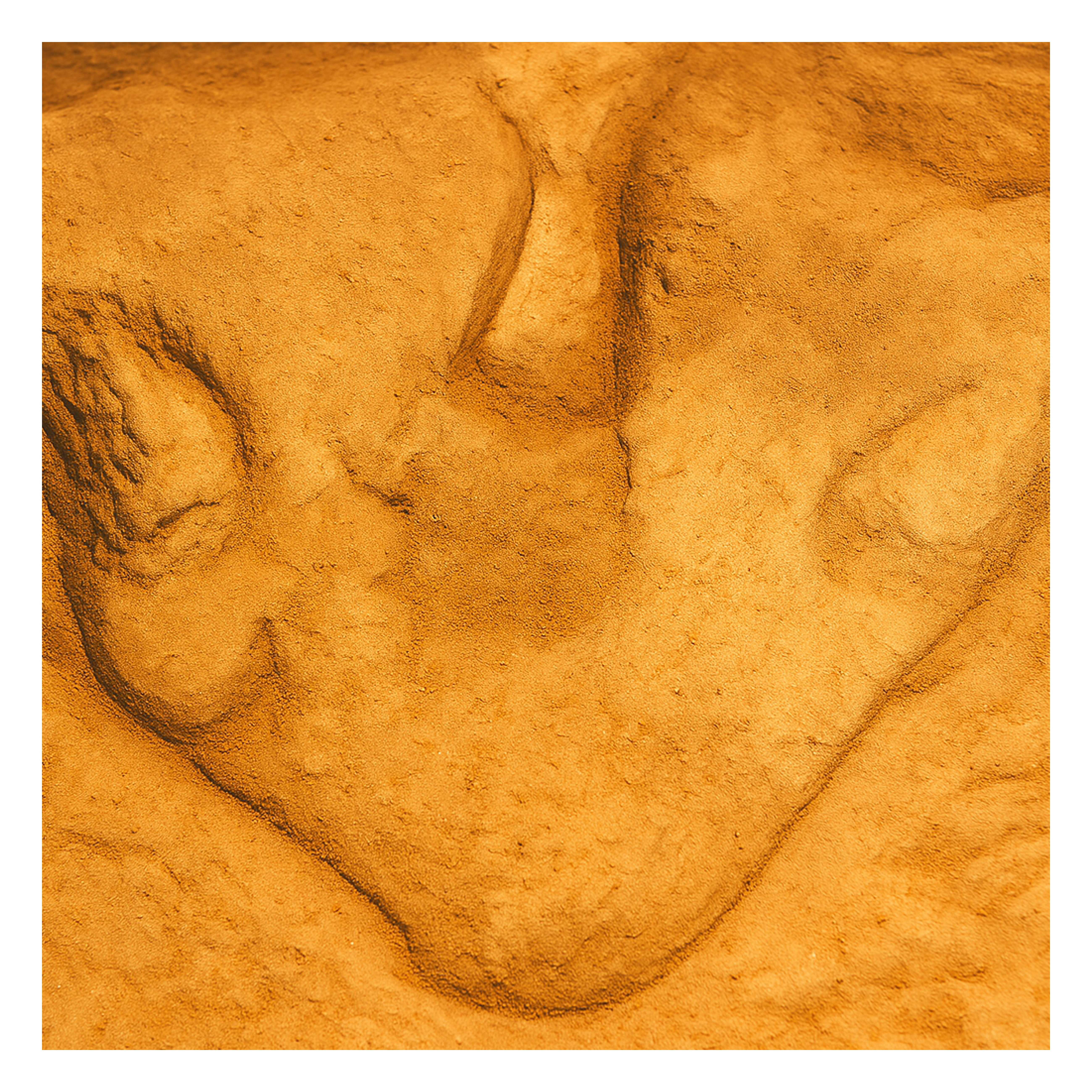
A dinosaur footprint left in clay.
How Fossils Provide Evidence for Evolution
1. Fossil records show changes over time
- By comparing fossils from different geological layers, scientists can observe how species have changed gradually over millions of years.
- Example: Fossils of ancient horses show a gradual increase in size and change in hoof structure, adapted to different environments.
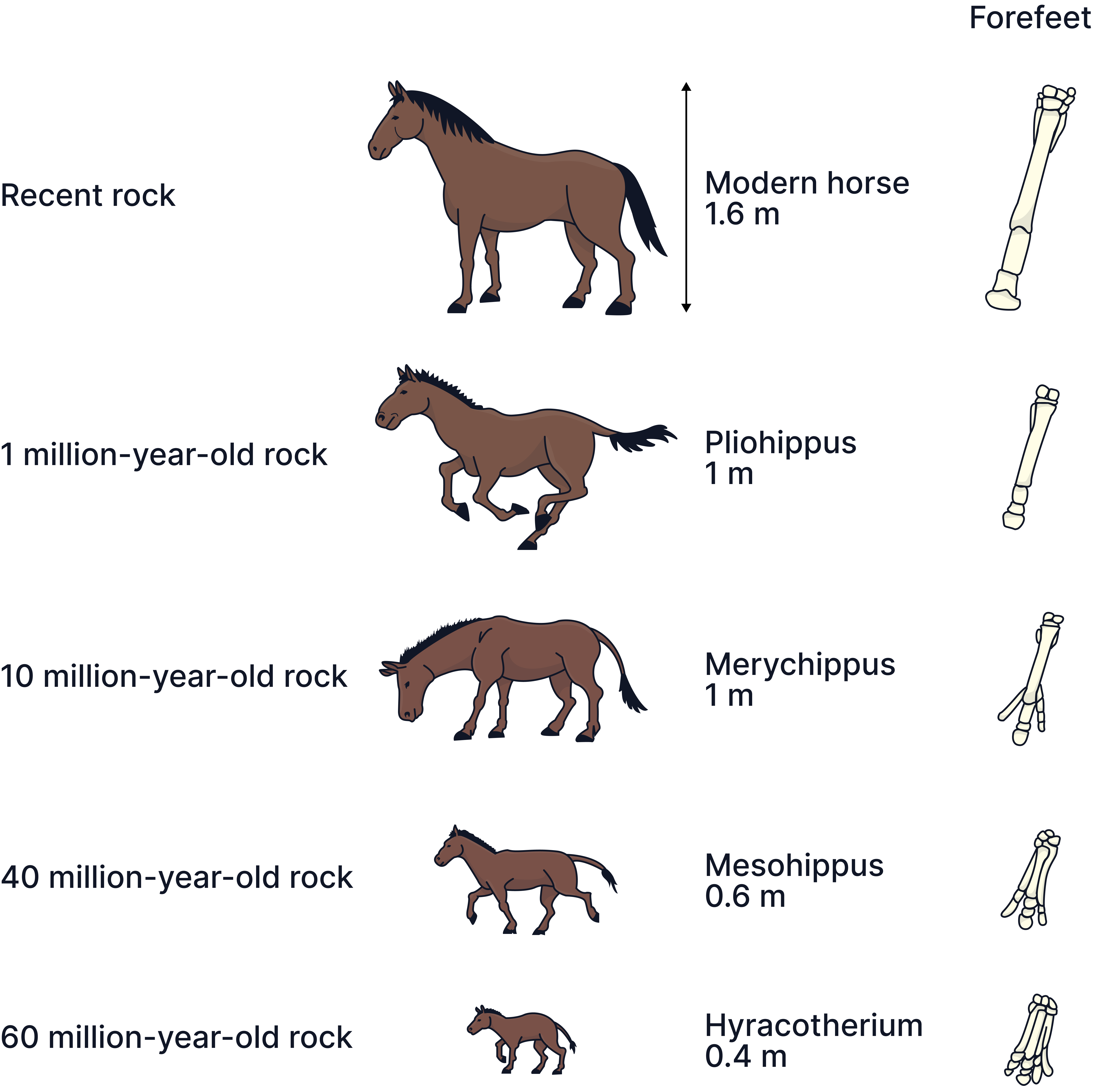
This is the fossil record of the horse's leg and hoof, showing how they gradually changed over time to become better adapted – supporting the theory of evolution.
2. Reveal extinct species
- Fossils show organisms that no longer exist, suggesting that life on Earth has not always been the same and that some species have died out while others evolved.
3. Support common ancestry
- Similarities in fossil structures (e.g., limbs, skulls) across different species suggest they shared a common ancestor and have evolved over time.
Why the Fossil Record Is Incomplete
- Many early organisms were soft-bodied, so didn’t form fossils (they all decayed).
- Geological activity has destroyed many fossils.
- Fossils can be hard to find as they can be buried deep under layers of sediment.
Key Terms
-
Speciation – The formation of new species from an existing species.
-
Isolation – When populations are separated and cannot breed with each other.
-
Natural selection – The process where better-adapted organisms are more likely to survive and reproduce.
-
Fossil – The preserved remains or traces of an organism.
-
Fossilisation – The process by which a fossil is formed.
-
Fossil record – The collection of all discovered fossils, used to interpret the history of life.
-
Mineralisation – Replacement of organic material with minerals in fossil formation.
No answer provided.
Exam Tip
When a fossil is found:
-
If it’s deep down in a lower rock layer, it means the organism lived a long time ago.
-
If it’s found in a higher (more recent) layer, the organism lived more recently.
This is because layers of rock build up over time, with the oldest layers at the bottom and the newest layers at the top.
No answer provided.
Practice Question
Question 1
This is a fossil of a sea animal called a Plesiosaur.
The Plesiosaur was alive about 135 million years ago.
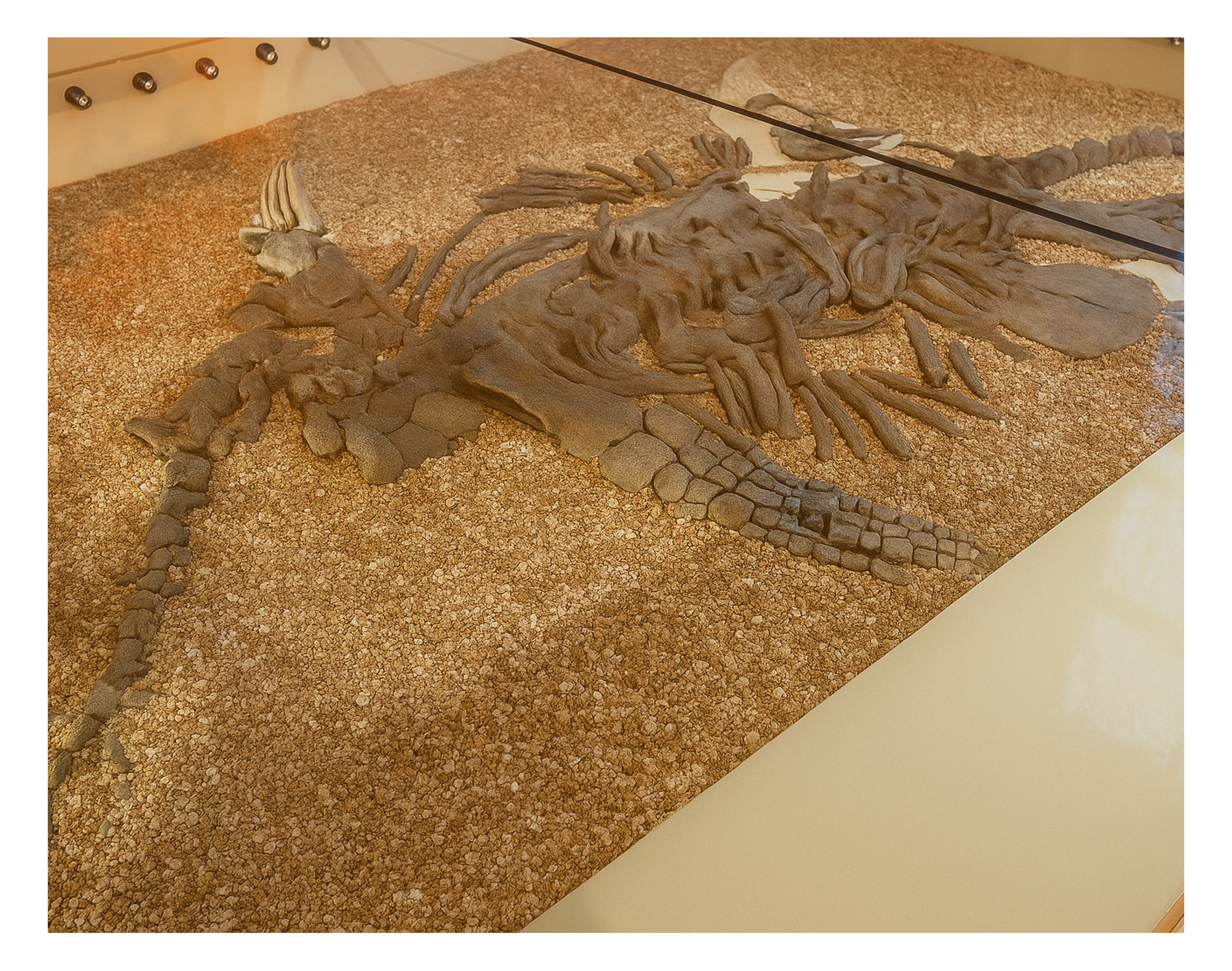
Suggest how the fossil shown may have been formed after the animal died. (3 marks)
- It was covered in sediment / mud.
- soft parts decay or bones / hard parts do not decay.
- minerals enter bones / parts are replaced by minerals / mineralisation occurs.
Question 2
Scientists think that the Plesiosaur had smooth skin, with no scales.
The scientists cannot be certain what the skin of a Plesiosaur was like.
Suggest why. (1 mark)
skin is soft / skin not preserved / not fossilised / skin decays.
More Practice
Try to answer these practice questions from the TikTok videos on your own, then watch the videos to see how well you did!