Inherited Disorders - Cystic Fibrosis And Polydactyly
Laura Armstrong
Teacher

Laura Armstrong
Head of Biology
Recall Questions
This topic requires prior knowledge of key inheritance terms and genetic crosses.
What is a dominant allele?
An allele that is always expressed in the phenotype, even if only one copy is present
What is a recessive allele?
An allele that is only expressed if two copies are present in the genotype or there is no dominant allele present
What does a Punnett square show?
It shows the possible genotypes and phenotypes of offspring from a genetic cross
Topic Explainer Video
Check out this @lauradoesbiology video that explains Inherited disorders- cystic fibrosis and polydactyly, then read the study notes. Once you’ve gone through them, don’t forget to try the practice questions!
Inherited Disorders
What Are Inherited Disorders?
- Inherited disorders are caused by faulty alleles passed from parents to offspring.
- These conditions are genetic and can be dominant or recessive in inheritance.
Polydactyly – Dominant Inheritance
- Polydactyly causes extra fingers or toes.
- It is caused by a dominant allele (D).
- Only one copy of the faulty allele is needed to have the disorder.
Example Genetic Cross: Polydactyly (D = polydactyly, d = normal)
Parent 1: Dd (affected), Parent 2: dd (unaffected)
|
D |
d |
|
|
d |
Dd |
dd |
|
d |
Dd |
dd |
- Offspring Genotypes: 2 Dd, 2 dd
- Offspring Phenotypes: 2 affected, 2 unaffected
- Probability of affected child = 2/4 = 50%
Cystic Fibrosis – Recessive Inheritance
- Cystic fibrosis affects cell membranes, leading to thick, sticky mucus.
- It is caused by a recessive allele (n).
- A person needs two copies of the faulty allele to be affected.
Example Genetic Cross: Two Carriers (Nn × Nn)
|
N |
n |
|
|
N |
NN |
Nn |
|
n |
Nn |
nn |
- Offspring Genotypes: 1 NN, 2 Nn, 1 nn
- Offspring Phenotypes: 3 unaffected (2 carriers), 1 affected
- Probability of an affected child (nn) = 1/4 = 25%
How Cystic Fibrosis Is Inherited
As cystic fibrosis is caused by a recessive allele, this means a person must inherit two copies of the faulty gene (one from each parent) to have the disorder.
If both parents are carriers, they each have one faulty allele (n) and one normal allele (N). Their genotype is Nn.
When they have a child, there are four possible combinations of alleles the child could inherit:
- NN – child inherits a normal allele from each parent → unaffected
- Nn – child inherits one normal and one faulty allele → carrier
- nn – child inherits the faulty allele from both parents → has cystic fibrosis
This means each child has:
- 25% chance of being affected
- 50% chance of being a carrier
- 25% chance of being unaffected and not a carrier
Definition: Carrier
A carrier is a person who has one normal allele and one faulty allele for a genetic disorder. They are heterozygous.
- They do not show any symptoms of the disorder.
- However, they can pass the faulty allele on to their children.
Cystic Fibrosis – Symptoms and Treatments
Symptoms
Cystic fibrosis affects cell membranes, causing thick, sticky mucus to build up in certain parts of the body, especially the lungs and digestive system.
Common symptoms include:
- Persistent coughing and chest infections
- Difficulty breathing
- Poor growth
- Digestive problems due to blocked pancreatic ducts (meaning fewer enzymes are released)
- Frequent lung infections (e.g., bronchitis, pneumonia)
Treatments
There is no cure, but treatments help manage symptoms and improve quality of life.
Common treatments include:
- Daily physiotherapy – to loosen mucus in the lungs
- Antibiotics – to treat and prevent lung infections
- Enzyme supplements – to help with digestion and nutrient absorption
- Inhalers – to open airways
- High-calorie diet – to maintain weight
Important Note: Treatments do not cure cystic fibrosis but can significantly extend life expectancy and improve symptoms.
Embryo Screening
What is embryo screening?
A technique used to test embryos for inherited disorders.
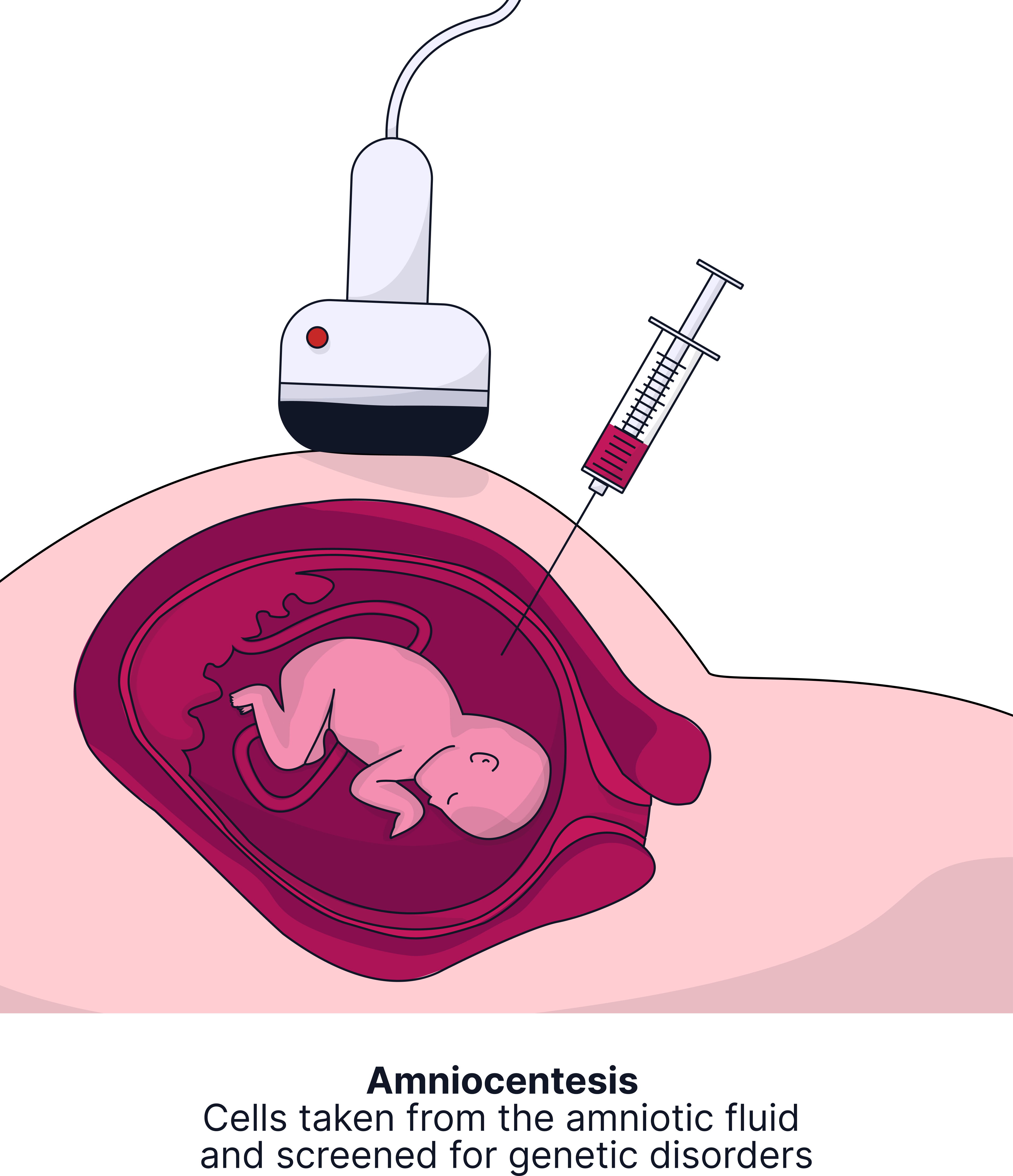
During IVF, embryos are fertilised in the lab. It is possible to remove a cell from an embryo and check it for genetic disorders before it is implanted into the mother’s womb. This is called pre-implantation genetic screening.
It is also possible to collect DNA from an embryo already in the womb and test for genetic disorders. Amniocentesis is where cells present in the amniotic fluid are collected and checked for any genes that cause genetic disorders. This is only offered where there is a higher risk that the embryo may have a genetic disorder.
Pros:
- Reduces risk of babies born with genetic conditions who may suffer.
- Saves future medical costs.
- Can prepare families emotionally and financially for future care needs.
Cons:
- Ethical concerns about destroying embryos.
- May go against religious beliefs.
- Amniocentesis increases risk of miscarriage or may lead to pressure to have an abortion.
- The embryo may be damaged during the process of screening.
Key Terms
- Carrier – A person who has one copy of a faulty allele but does not show symptoms.
- Genotype – The alleles an individual has for a gene.
- Phenotype – The characteristics shown, determined by genotype and environment.
- Embryo screening – testing embryos to determine if they have a genetic disorder.
No answer provided.
Exam Tips:
For a 4-mark genetic cross question, always include:
- The parents’ genotypes.
- A Punnett square.
- The genotypes and phenotypes of offspring.
- A clear probability or ratio of outcomes.
You may be told which letter to use for the alleles in an exam question. If not, you can choose your own letter but avoid using letters such as S and s, V and v or W and w as the capital letter looks too similar to the lower case letter.
No answer provided.
Practice Question
Cystic fibrosis (CF) is an inherited disorder. A man and a woman do not have CF.
The man and the woman have a child who has CF.
Q1. Draw a Punnett square diagram to find the probability that their next child will have CF.
Use the symbols:
T = dominant allele
t = recessive allele
Draw a ring around the genotype of any children with CF. (4 marks)
The woman is pregnant. The woman can have embryo screening to find out if the child will have CF.
Q2. Suggest one reason why the woman might not want to have embryo screening. (1 mark)
Model answers:
Q1. Both parents shown as heterozygous Tt and Tt.
Punnett square is correct to show 1 unaffected, 2 carriers and 1 affected offspring.
|
T |
t |
|
|
T |
TT |
Tt |
|
t |
Tt |
tt |
tt identified as offspring with CF
correct probability of tt e.g., 1/4, 25%, 0.25
Q2. any one from:
• it might harm the embryo / baby / mother.
• it might cause a miscarriage.
• they do not want to make a choice about having an abortion.
• it is against their religious beliefs.
More Practice
Try to answer these practice questions from the TikTok videos on your own, then watch the videos to see how well you did!