The Carbon Cyle
Laura Armstrong & Joe Wolfensohn
Teachers


Contents
Recall Questions
This topic requires prior knowledge of photosynthesis and respiration.
What gas do plants take in for photosynthesis?
Carbon dioxide (CO₂).
How do animals and plants add carbon dioxide back to the atmosphere?
By respiration.
How do plants and animals get carbon into their bodies?
Plants take in carbon dioxide during photosynthesis; animals get carbon by eating plants or other animals.
Topic Explainer Video
Check out this @JoeDoesGCSEBiology video that explains the carbon cycle, then read the study notes. Once you’ve gone through them, don’t forget to try the practice questions!
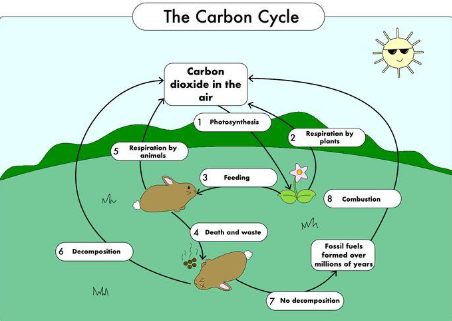
The Carbon Cycle
What is the Carbon Cycle?
- The carbon cycle is the recycling of carbon in the environment.
- Carbon is needed to make all living things because it’s found in carbohydrates, proteins, and lipids (fats).
Key Processes in the Carbon Cycle
1. Photosynthesis
- Green plants and algae take in carbon dioxide from the atmosphere.
- They use it to make glucose during photosynthesis.
2. Eating (Feeding)
- Animals get carbon by eating plants (or by eating other animals that ate plants). They use this carbon to make their own carbohydrates, lipids and proteins.
3. Respiration
- Plants and animals release carbon dioxide back into the atmosphere when they respire.
4. Decomposition (Decay)
- When plants and animals die, microorganisms (decomposers) break down their remains.
- These decomposers respire, releasing more carbon dioxide into the atmosphere.
- Decomposition of dead plants and animals by microorganisms also returns mineral ions such as nitrates to the soil. Other plants can then absorb these ions and use them for growth, such as using nitrate ions to make new proteins.
5. Combustion (Burning)
- Burning fossil fuels (coal, oil and gas) and wood releases stored carbon back into the atmosphere as carbon dioxide.
Why Is the Carbon Cycle Important?
- It keeps carbon moving between the air, plants, animals, and soil.
- It maintains a balance - without it, CO₂ would build up too much or run out.
Why Carbon Dioxide Levels Are Becoming Unbalanced
More carbon dioxide is being added than removed.
- Burning fossil fuels (combustion):
Humans burn large amounts of coal, oil, and gas for energy.
This releases extra carbon that was locked away underground for millions of years. - Deforestation:
Large areas of forest are cut down for farming and building.
Fewer trees means less photosynthesis, so less carbon dioxide is removed from the atmosphere by plants.
Decomposition and respiration continue, but with less balance.
- Decomposition and respiration by plants, animals, and microorganisms still release carbon dioxide naturally - this is normal.
- But because we are adding extra carbon dioxide by burning fuels and removing trees, the balance is disturbed.
The result:
- More carbon dioxide in the atmosphere, increasing the greenhouse effect.
- This leads to global warming and climate change. More on this in a future study note!
Key Terms & Definitions
- Carbon cycle - The recycling of carbon between the atmosphere, living things, and the environment.
- Photosynthesis - The process by which plants make glucose using carbon dioxide, water, and light.
- Respiration - The process that releases energy from glucose and produces carbon dioxide.
- Decomposition - The breakdown of dead material by microorganisms, releasing carbon back into the atmosphere as CO2.
- Combustion - Burning fuels or biomass to release energy and carbon dioxide.
No answer provided.
Exam Tip:
When asked about the carbon cycle, remember the 5 key processes involved photosynthesis, respiration, feeding, decay, and combustion.
No answer provided.
Practice Question
Explain how carbon is cycled through a woodland ecosystem. (4 marks)
Model Answer:
- Plants take in carbon dioxide from the air during photosynthesis.
- Animals eat plants, transferring carbon to themselves and using carbon to make proteins / carbohydrates / lipids.
- Plants and animals respire, releasing carbon dioxide back into the air.
- When plants and animals die, decomposers break them down and release carbon dioxide by respiration.
More Practice
Try to answer these practice questions from the TikTok videos on your own, then watch the videos to see how well you did!