Triple Science Only - Controlling body temperature
Laura Armstrong & Joe Wolfensohn
Teachers


Recall Questions
This topic requires prior knowledge of homeostasis.
What is homeostasis?
The regulation of internal conditions to maintain a stable internal environment.
What is negative feedback?
A mechanism that detects a change and works to reverse it, bringing conditions back to normal.
Why is homeostasis important?
It keeps internal conditions like temperature and blood glucose within optimal ranges for enzymes and cells to work properly.
Topic Explainer Video
Check out this @Lauradoesbiology video that explains controlling body temperature, then read the study notes. Once you’ve gone through them, don’t forget to try the practice questions!
Why body temperature needs to be controlled.
-
The optimum temperature for our enzymes is around 37°C.
-
If body temperature gets too high, enzymes may denature. If body temperature gets too low, enzymes will work slowly, reducing the rate of important metabolic reactions.
Changes in temperature are monitored and detected by receptors.
These receptors, which are known as thermoreceptors, are located in two places-
-
The Thermoregulatory Centre (in the Brain)
-
The skin
The thermoreceptors in the thermoregulatory centre are located in the hypothalamus in the brain. They monitor the temperature of the blood flowing through the brain. We call this the core temperature.
The thermoreceptors in the skin monitor the temperature of the skin and the external temperature. They send electrical impulses to the thermoregulatory centre.
The thermoregulatory centre then acts as the co-ordinator and will co-ordinate our body’s response.
Responding to Temperature Changes
If the body is too hot:
-
Sweating: Sweat glands produce sweat. Sweat evaporates, transferring heat energy away from the skin.
-
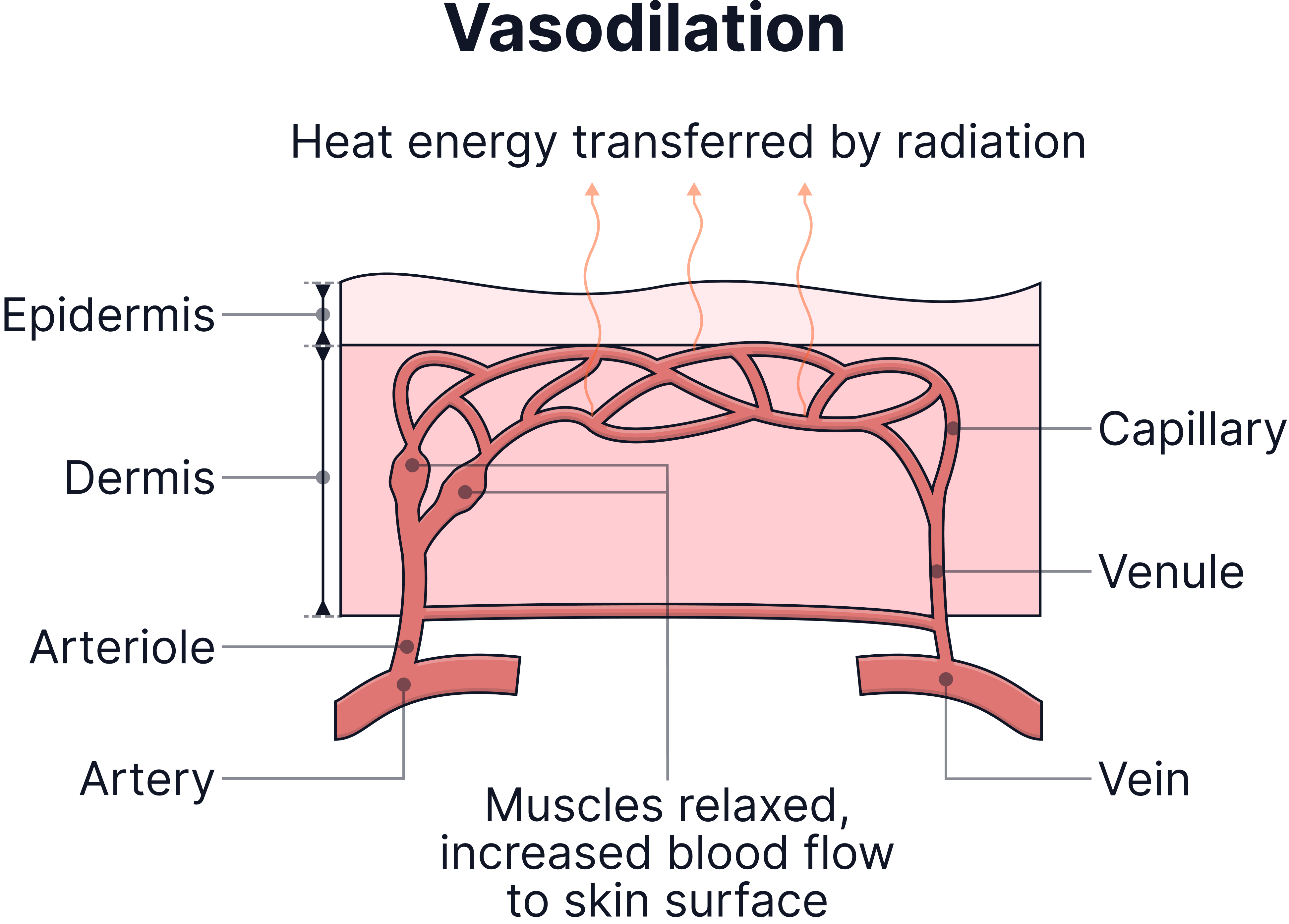
Vasodilation: Blood vessels near the skin surface dilate (widen), increasing blood flow to the skin surface so more heat energy is lost through the skin.
If the body is too cold:
-
Shivering: Muscles contract rapidly, increasing rate of respiration and releasing heat energy to warm us up.
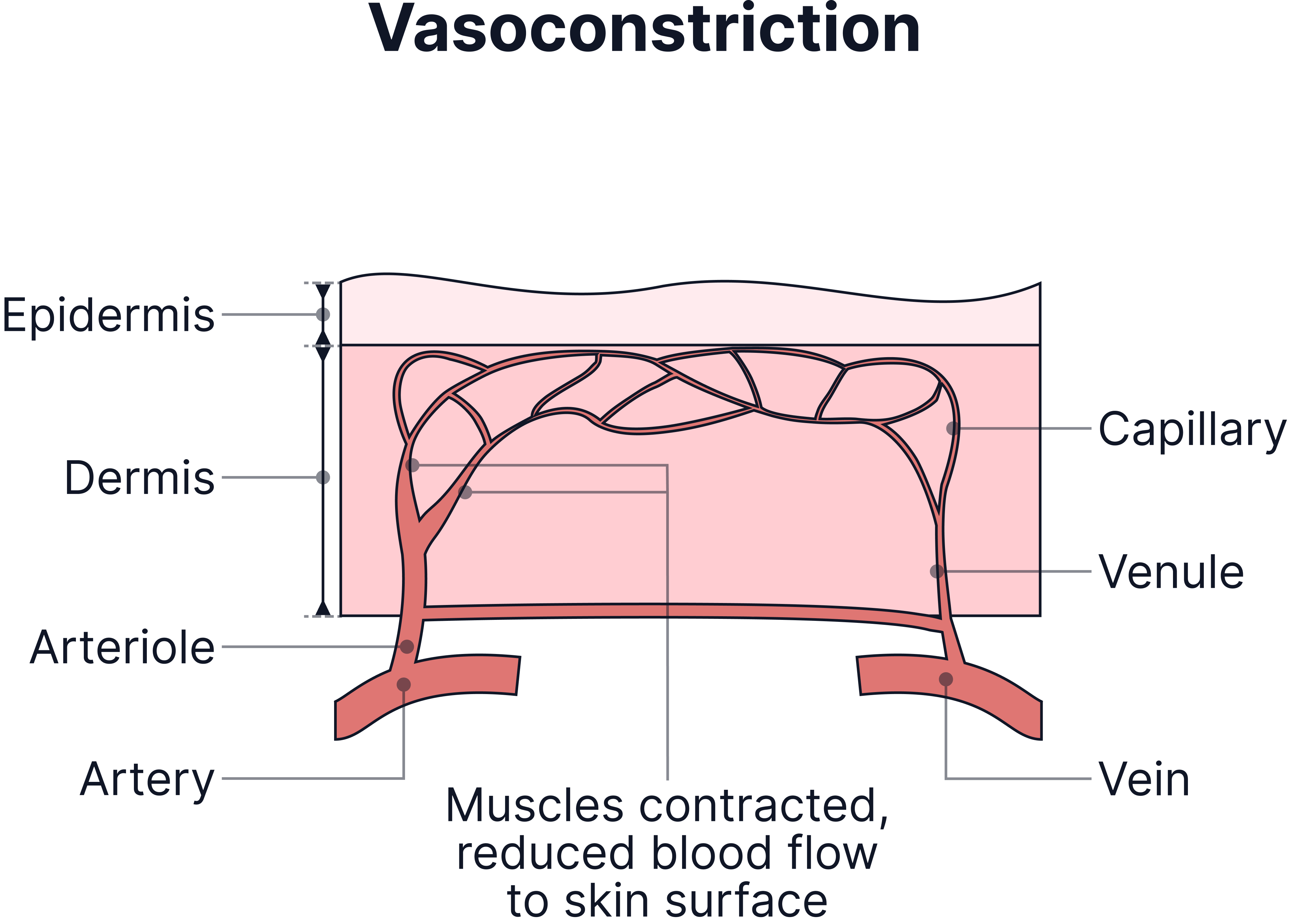
- Vasoconstriction: Blood vessels near the skin surface constrict (narrow), reducing blood flow to the surface and reducing heat loss through the skin.
Negative Feedback in Temperature Control
-
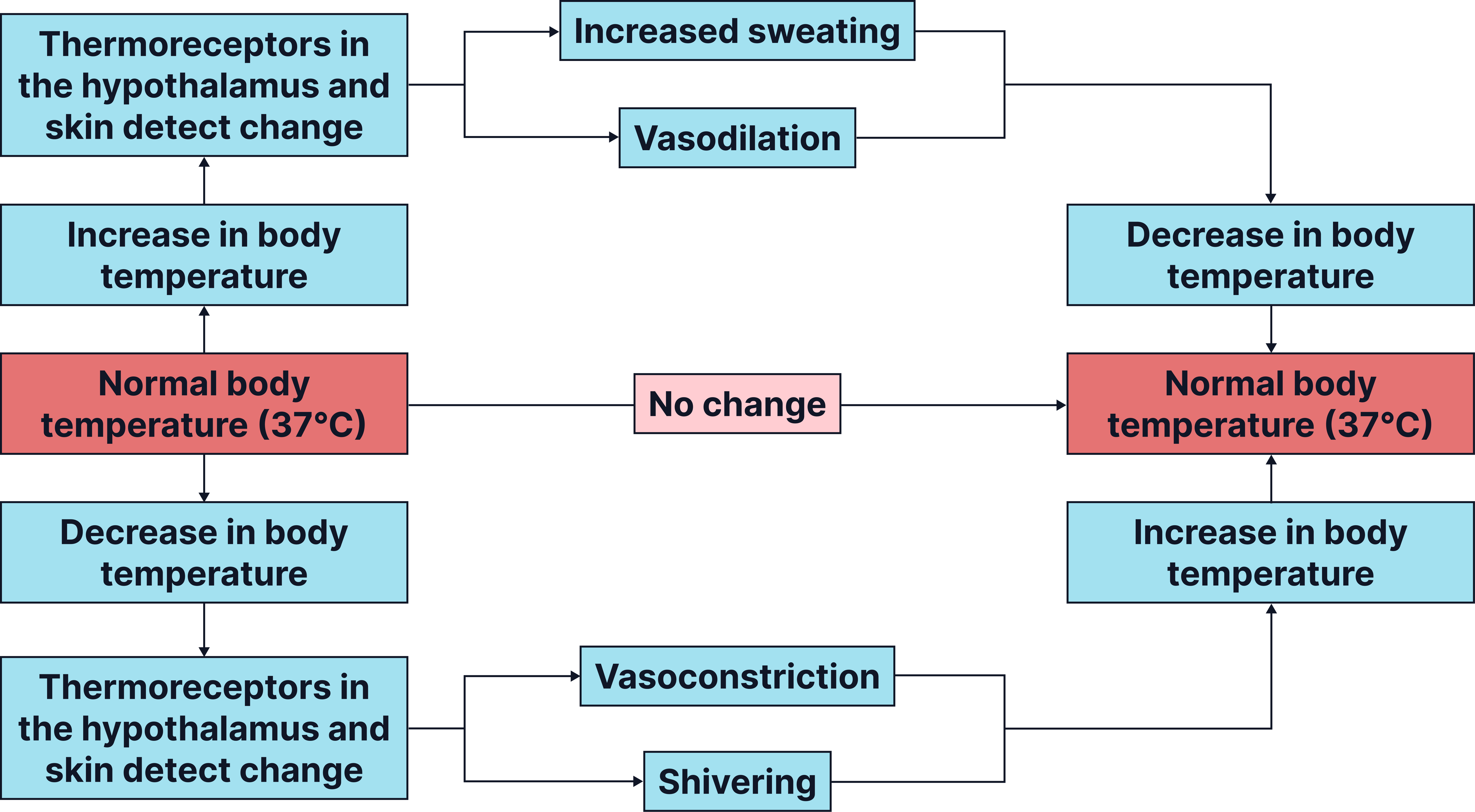
The thermoregulatory centre uses negative feedback to keep body temperature within a narrow range:
-
If temperature rises, mechanisms lower it.
-
If temperature falls, mechanisms raise it.
This ensures temperature remain stable.
Key Terms
- Homeostasis - The regulation of internal conditions to maintain a stable environment. This provides optimum conditions for cells and enzymes.
- Negative feedback - A response that counteracts a change to restore normal conditions.
- Thermoregulatory centre - Part of the brain (in the hypothalamus) that controls body temperature.
- Vasodilation - Widening of blood vessels near the skin surface to increase heat loss.
- Vasoconstriction - Narrowing of blood vessels near the skin surface to reduce heat loss.
- Shivering - Rapid muscle contractions that increase the release of heat energy through respiration.
No answer provided.
Exam Tip
Not all blood vessels will constrict or dilate. Make sure to specify it is the blood vessels near the skin surface. It is actually the arterioles that supply the capillaries in the skin that do this, not the capillaries themselves. Remember, capillaries do not have muscle in the walls. Never say capillaries constrict or dilate.
No answer provided.
Practice Question
Body temperature is monitored and controlled by the thermoregulatory centre in the brain.
Describe what happens in the body to keep the body temperature constant. (6)
- temperature receptors in thermoregulatory centre/ hypothalamus detect core body temperature / blood temperature.
- temperature receptors in the skin send impulses to the thermoregulatory centre, giving information about skin temperature.
- if body temperature is too high: blood vessels near the skin surface dilate / vasodilation
- so that more blood flows (through the skin) and more heat is lost.
- sweat glands release more sweat to cool the body by evaporation.
- if the core body temperature is too low: blood vessels near the skin surface constrict / vasoconstriction
- to reduce the flow of blood (through the skin) and less heat is lost.
- muscles may shiver to release (heat) energy from respiration.
More Practice
Try to answer these practice questions from the TikTok videos on your own, then watch the videos to see how well you did!