Congruence
Neil Trivedi
Teacher

Contents
Congruence
In geometry, we often need to decide whether two shapes are really "the same". This note covers what it means for two shapes to be congruent, and the four standard conditions we can use to prove that two triangles are congruent.
Congruent Shapes
Two shapes are congruent if they are exactly the same shape and the same size.
The symbol means "is congruent to".
Congruent shapes are allowed to be in different positions and different orientations. If we can fit one shape exactly onto the other using only translations, rotations and reflections, then the two shapes are congruent. These transformations move a shape around, but they never change its side lengths or its angles.
An enlargement is different: it changes the size of a shape. An enlarged copy has the same angles as the original and is called similar (see our Similar Shapes note), but it is not congruent (unless the scale factor is ).This is exactly the difference between the two triangles on the left below and the two triangles on the right.
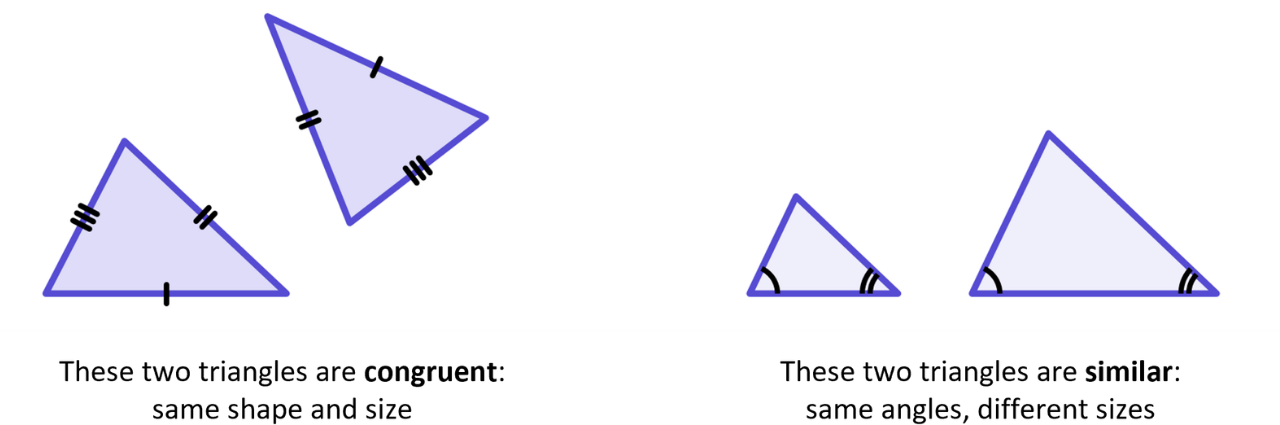
Why Triangles Are Special
Suppose two triangles have exactly the same three side lengths. Do they have to be congruent? For triangles, the answer is yes. Once the three sides of a triangle are fixed, its three angles are fixed as well, so only one triangle is possible (it can still be rotated or reflected, but it is always the same triangle). A triangle is a rigid shape.
The same is not true for other shapes. A square and a rhombus can have exactly the same four side lengths, yet they are clearly different shapes: the rhombus is a "pushed over" square with different angles. So, matching side lengths are enough to guarantee congruence for triangles, but not for quadrilaterals.

This rigidity is the reason why all the congruence conditions below are about triangles.
The Four Ways to Prove Two Triangles Are Congruent
To prove that two triangles are congruent, we do not need to check all three sides and all three angles. It is enough to check one of the following four combinations. In each condition, S stands for a pair of equal sides and A stands for a pair of equal angles.
The Four Congruence Conditions
SSS - three sides
SAS - two sides and the angle between them
ASA / AAS - two angles and a side, in any order
RHS - a right angle, the hypotenuse and one other side
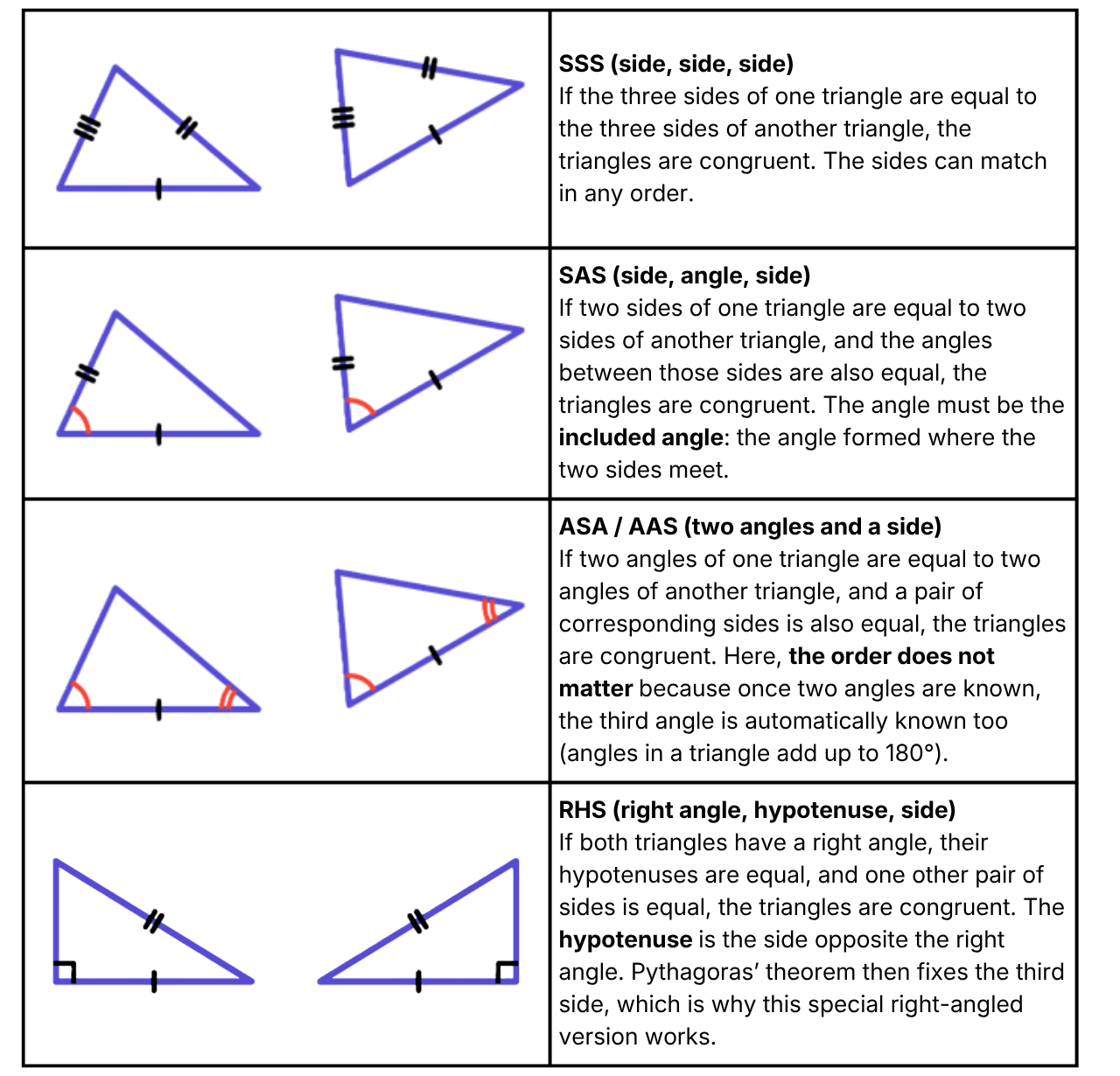
Why SSA Is Not Allowed
Be careful: SAS only works when the angle sits between the two sides. If the angle is not the included angle, the combination is called SSA, and SSA does not prove congruence.
To see why, try to construct a triangle with cm, angle and cm. Since the angle is not between the two given sides, there are two different triangles with exactly these measurements: one where the angle at is acute, and one where it is obtuse. This links to the Ambiguous Case for Sine, which you can learn more about in our Sine Rule study note.
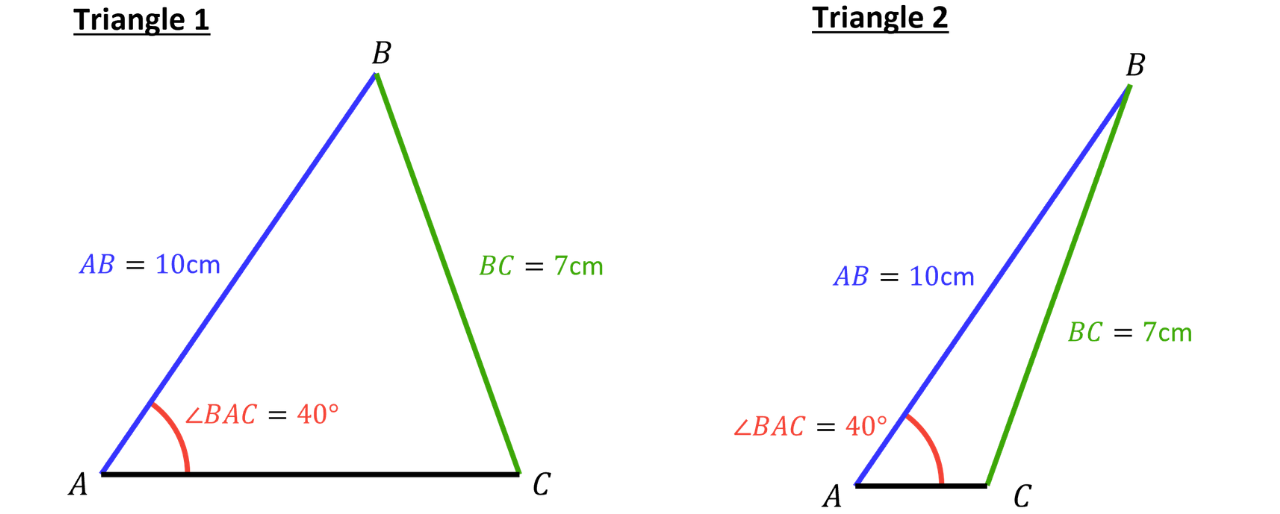
Because two different triangles can share the same SSA information, knowing SSA about two triangles can never pin them down to be identical.
Warning: Conditions That Do NOT Work
SSA (two sides and a non-included angle) does not prove congruence. In SAS, the angle must always be between the two sides.
AAA (three angles) does not prove congruence either. Two triangles with the same angles are similar, but one may be an enlargement of the other.
Writing a Congruence Proof
In an exam, a congruence proof is a short list of three matching facts, each with a reason, followed by a conclusion.
General Steps for Proving Two Triangles Are Congruent
State three pairs of equal sides or angles, chosen so that they match one of the four conditions.
Give a reason for each pair, for example "given", "common side", "vertically opposite angles", "alternate angles" or "radii of the same circle".
Label each fact with (S) or (A) so that the condition is easy to see.
Finish with a conclusion: "triangle ... is congruent to triangle ... by ...".
The reason "common" is used when the two triangles share a side or an angle. A shared side belongs to both triangles, so it certainly equals itself, and it counts as one of the three facts.
Example 1:
Which two of the triangles below are congruent? Give a reason for your answer.
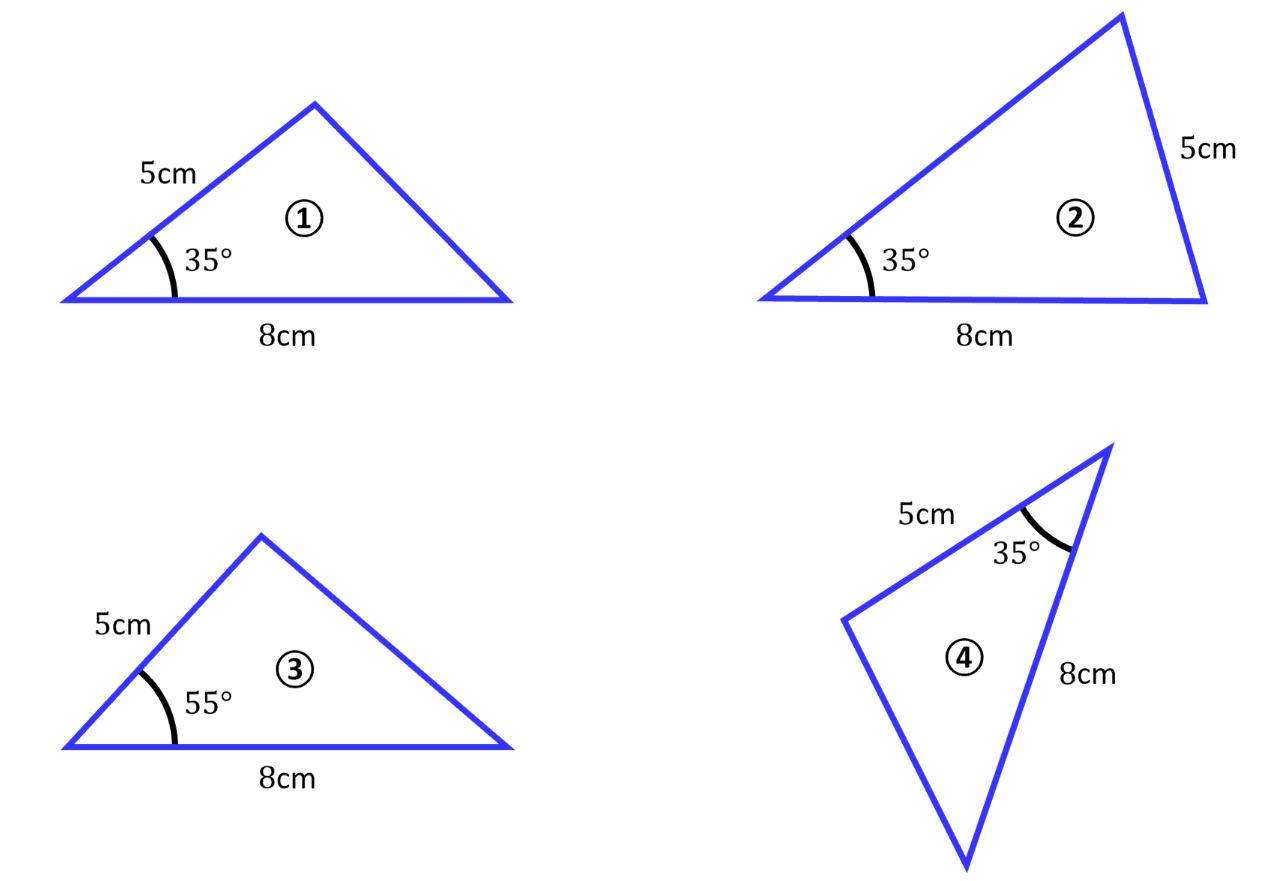
Single Step: Compare the information marked on each triangle against the four congruence conditions.
In triangle the angle sits between the sides of cm and cm. In triangle exactly the same is true: the cm side and the cm side meet at the angle.
So, in both triangles, we have
cm (S), (A), cm (S)
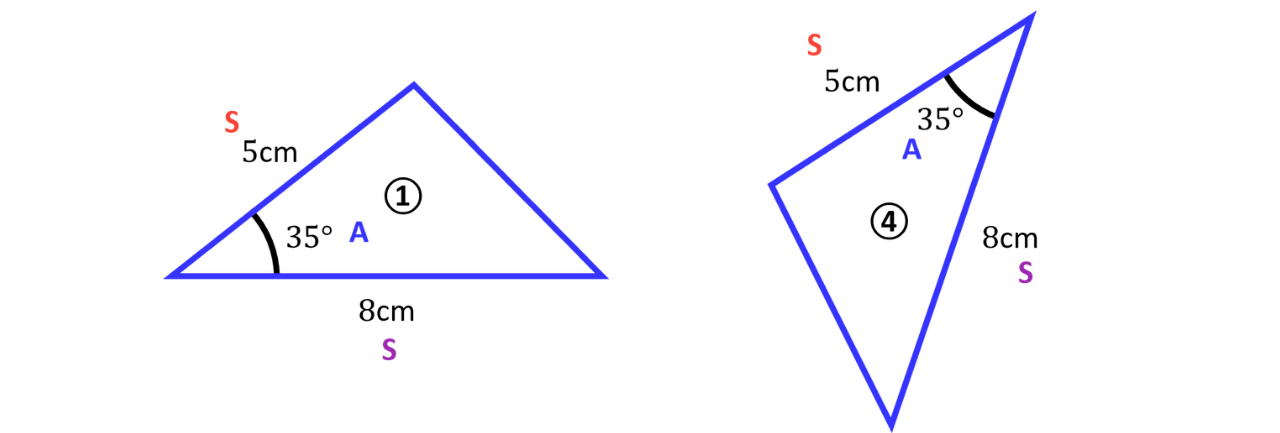
Triangle has been rotated and flipped, but this does not matter, because rotations and reflections keep a shape congruent.
Therefore, triangles and are congruent by SAS.
Why not the others? In triangle the angle is not between the cm and cm sides. This is SSA, which is not a congruence condition, and in fact, triangle is a genuinely different shape.
In triangle the angle in between the cm and cm sides is not so it cannot match triangles and
Tip: congruent triangles are often drawn in different orientations. Focus on the measurements and on where the angle sits relative to the sides, not on how the triangle happens to be drawn.
Example 2:
In triangle is the midpoint of Prove that triangle is congruent to triangle
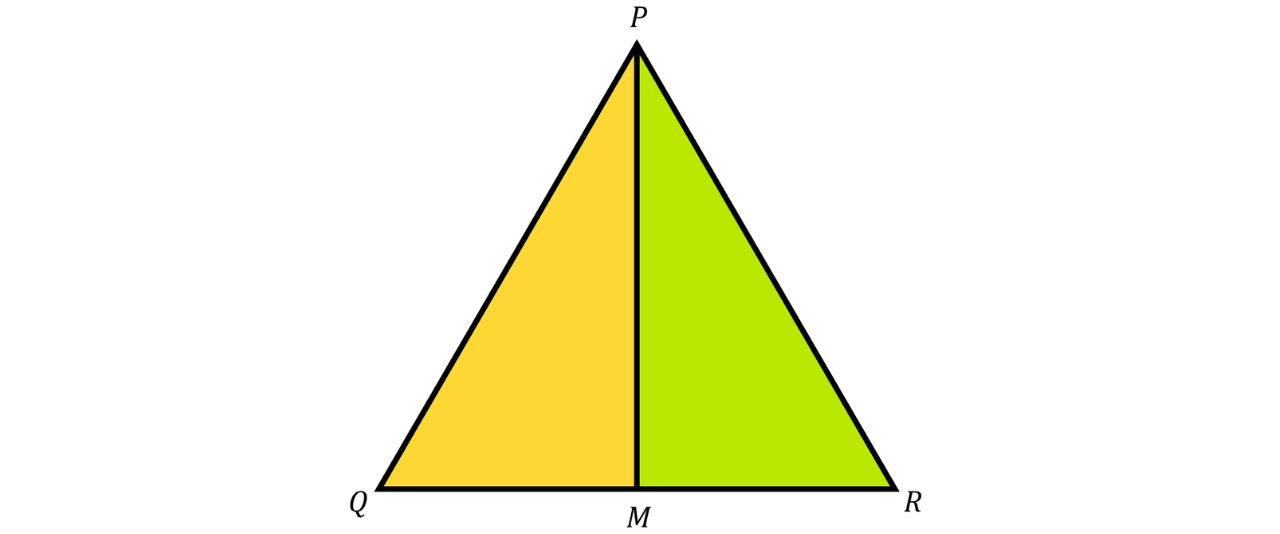
Step 1: State three pairs of equal sides, giving a reason for each.
(given)(S)
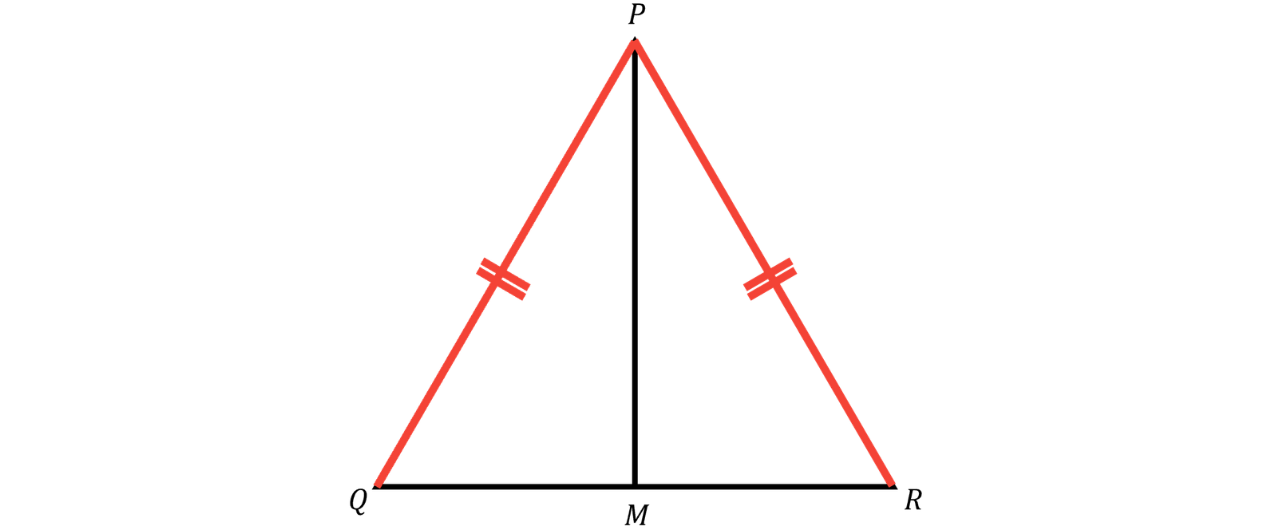
is the midpoint of (S)
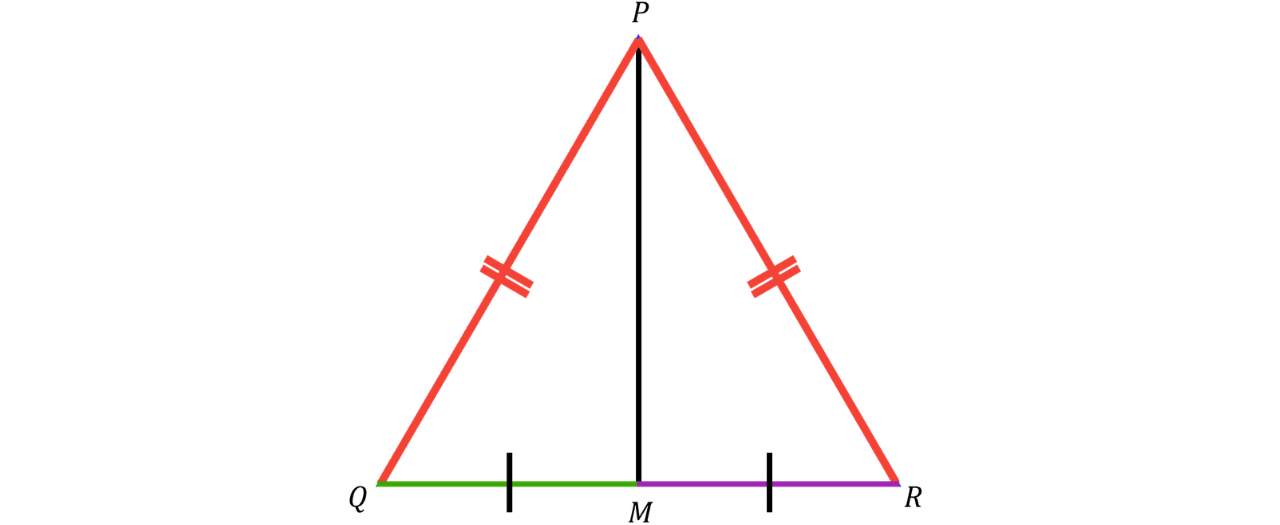
3) is common on both triangles(S)
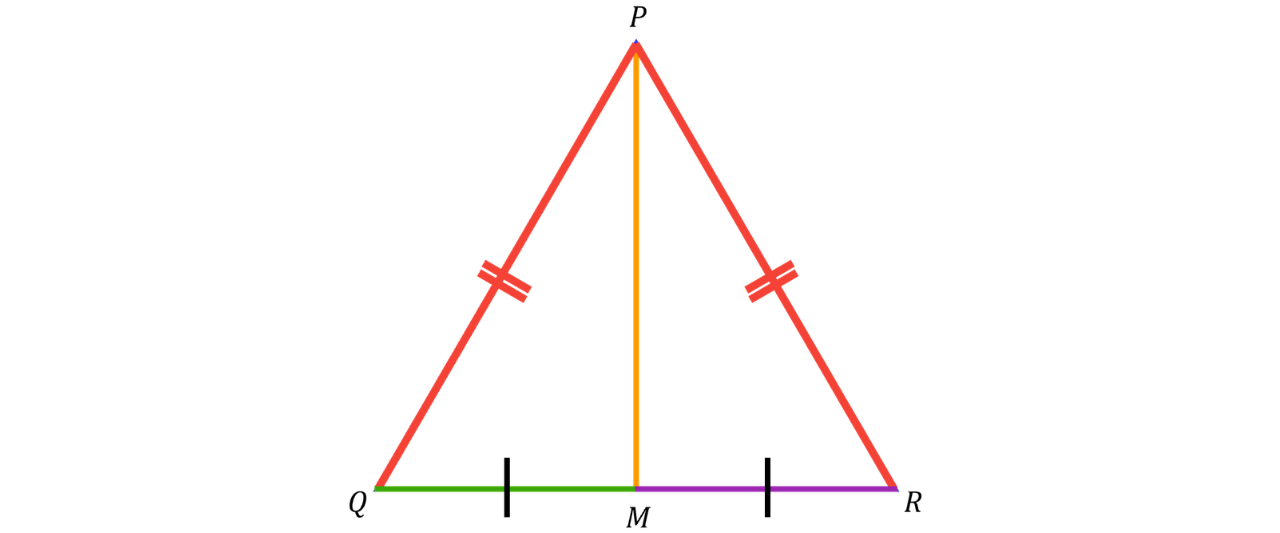
Step 2: State the conclusion.
All three pairs of sides are equal, so:
Triangle is congruent to triangle by SSS.
Tip: this congruence explains why the line joining the top vertex of an isosceles triangle to the midpoint of the base is a line of symmetry: it cuts the triangle into two congruent halves.
Example 3:
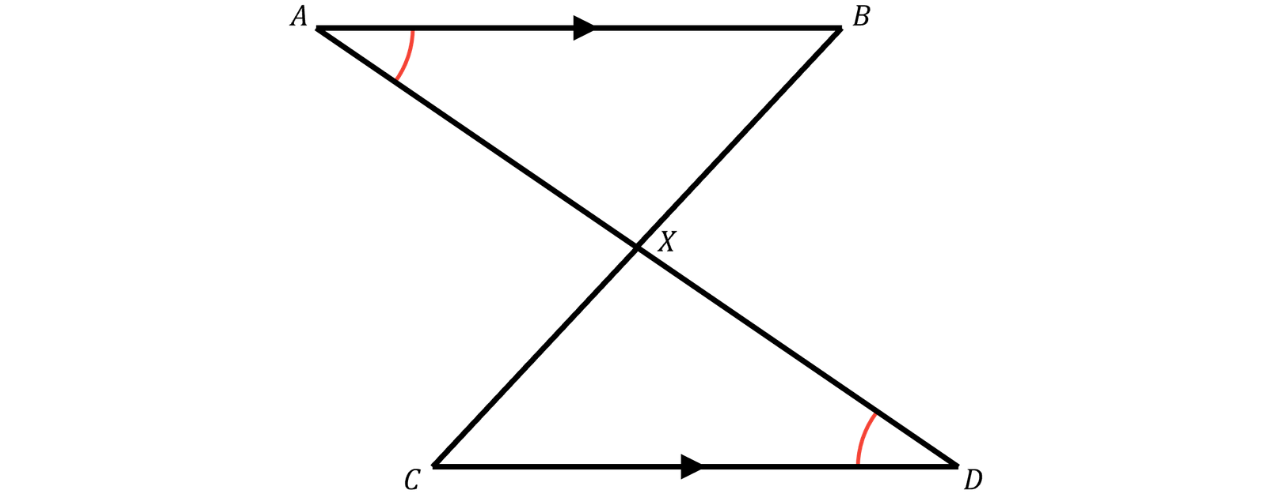
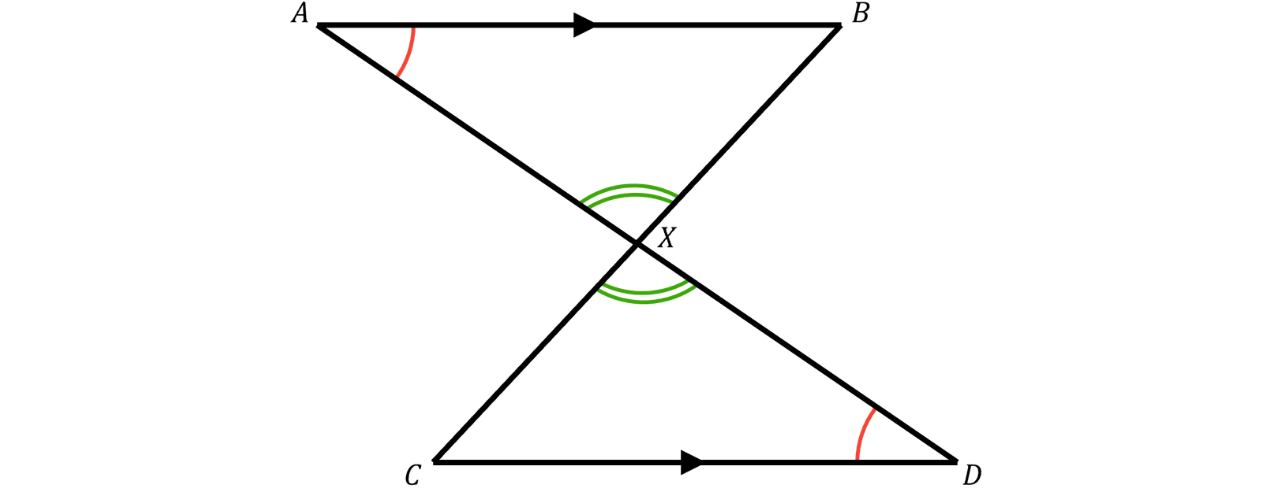
In the diagram, is parallel to and The straight lines and cross at the point Prove that triangle ABX is congruent to triangle

Step 1: State three matching facts, giving a reason for each.
(alternate angles are equal and is parallel to )(A)
(vertically opposite angles are equal)(A)
(given)(S)
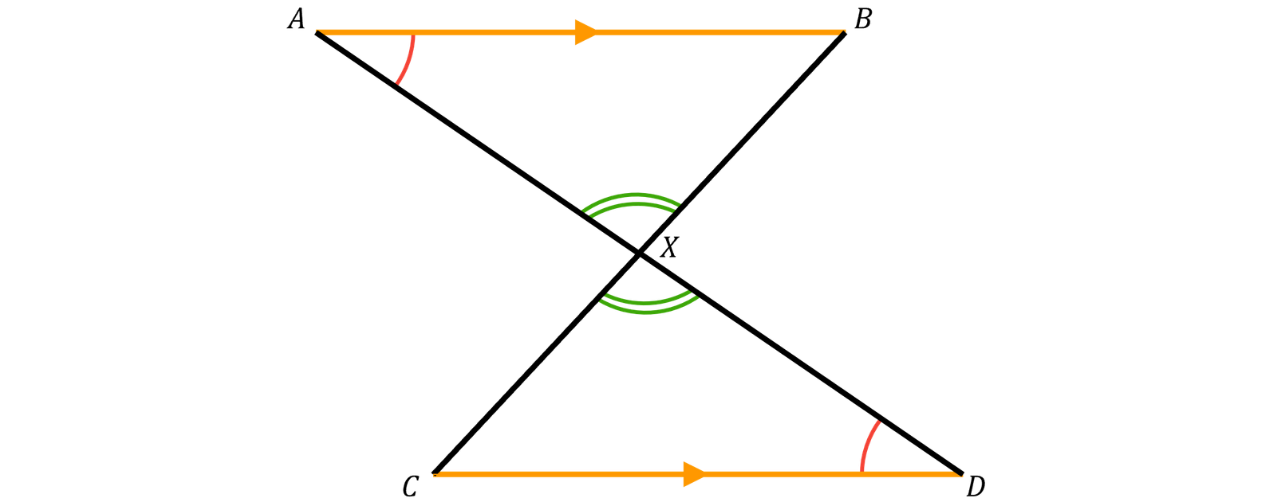
Step 2: State the conclusion.
We have two pairs of equal angles and a pair of equal corresponding sides, so:
Triangle is congruent to triangle by AAS.
Notice the correspondence: matches matches and matches It follows, for example, that and so is the midpoint of both and
Tip: we could instead have used the other pair of alternate angles together with the side That version is ASA. Both earn full marks: ASA and AAS are the same condition, with the angles and side taken in any order.
Proving that two triangles are congruent is often only the first step of a question. The real power of congruence is what it tells us afterwards.
Using a Congruence
Once two triangles are proved congruent, every pair of corresponding sides is equal, and every pair of corresponding angles is equal. This is how congruence is used to prove further results.
Example 4:
and are tangents from a point to a circle with centre The points and lie on the circle.
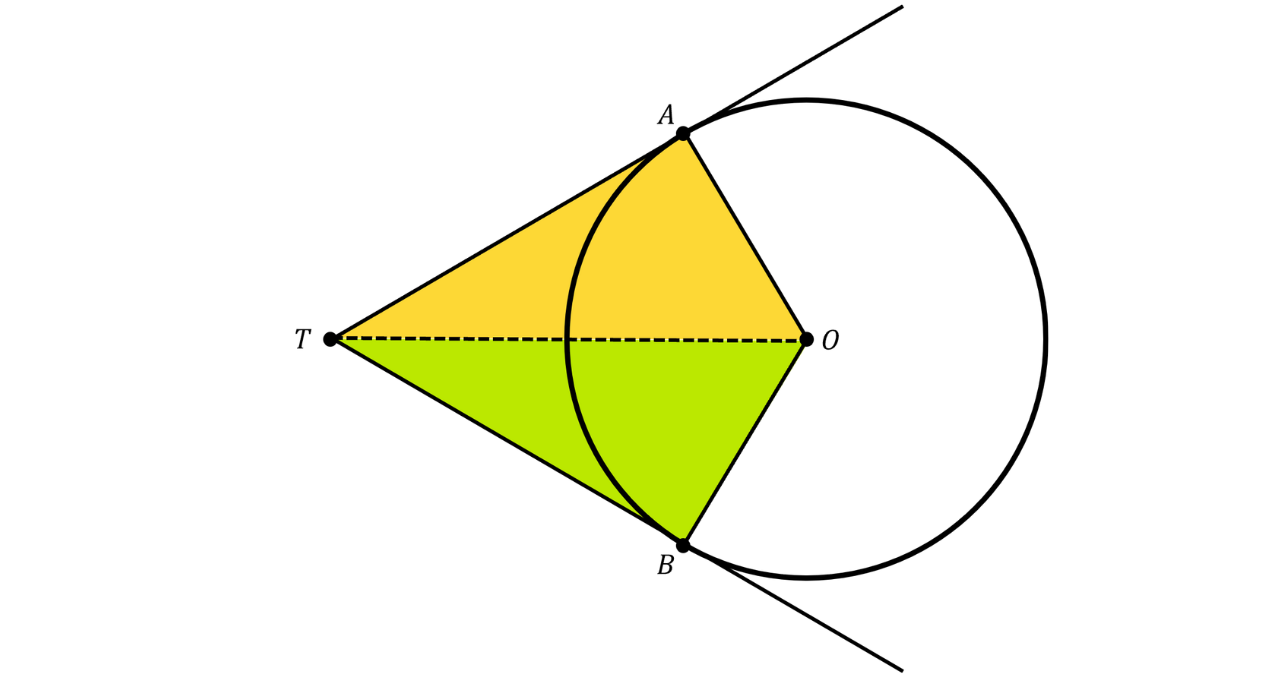
a) Prove that triangle is congruent to triangle
Step 1: State three matching facts, giving a reason for each.
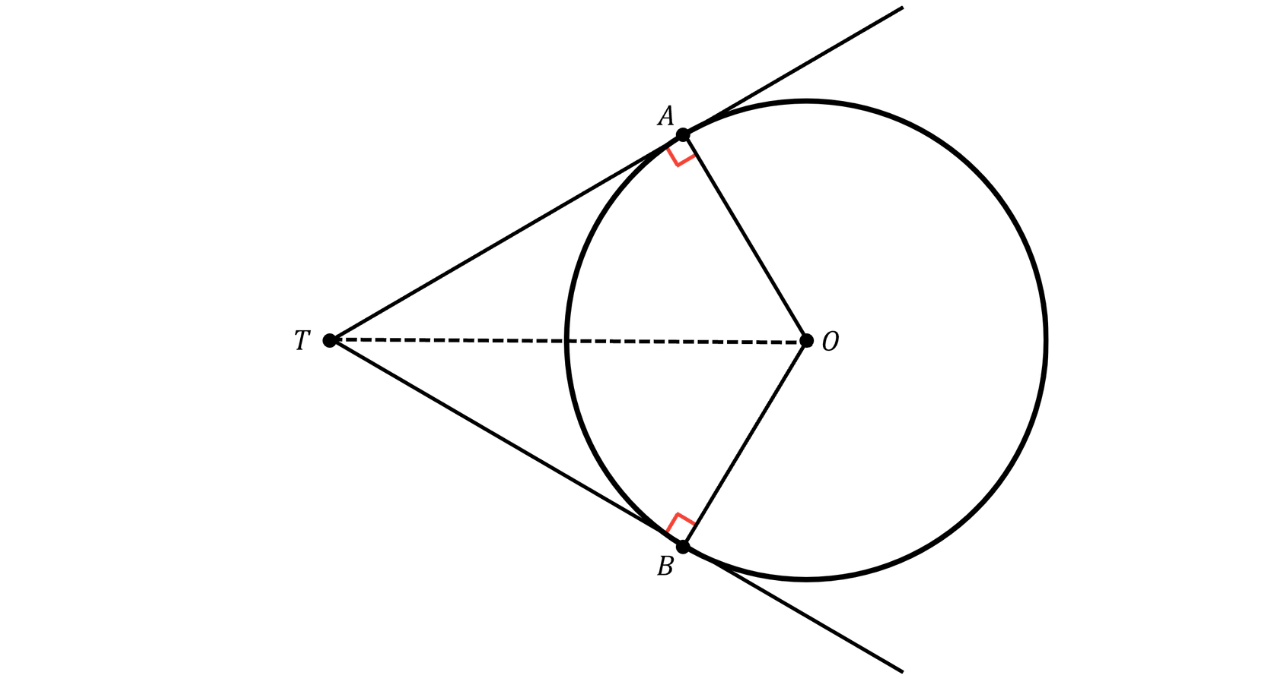
(a tangent meets a radius at )(R)
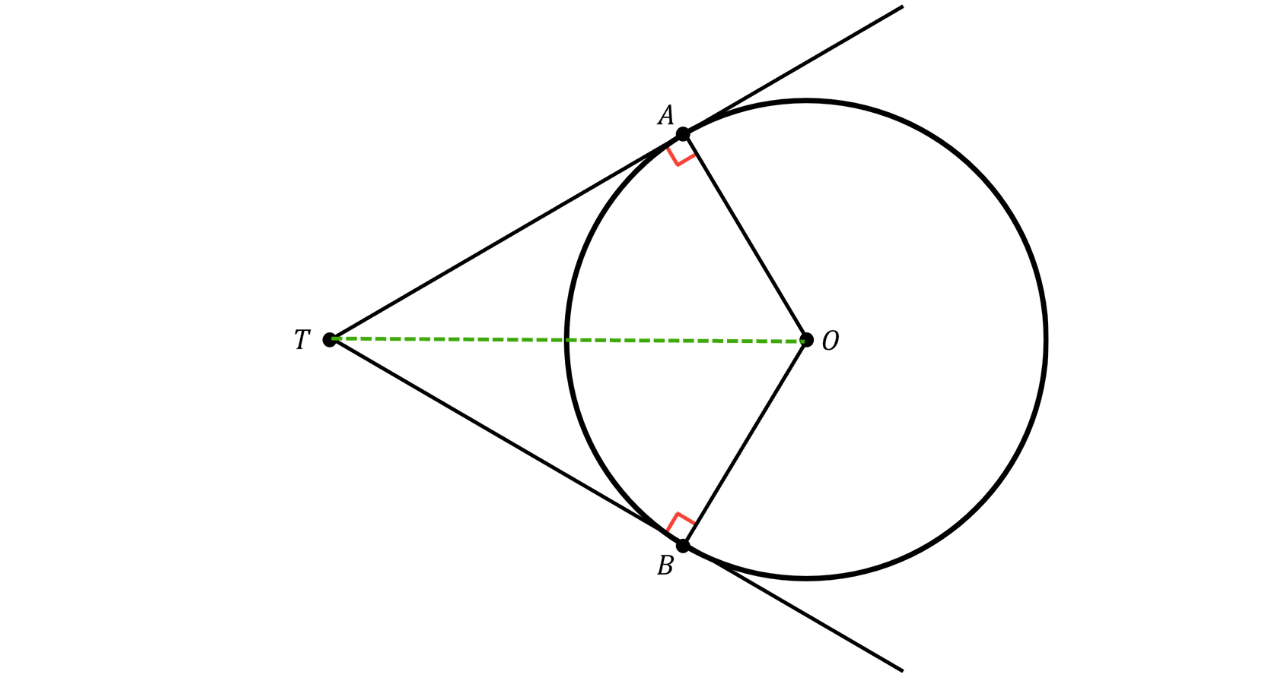
is common, and it is the hypotenuse of both triangles(H)
(radii of the same circle)(S)
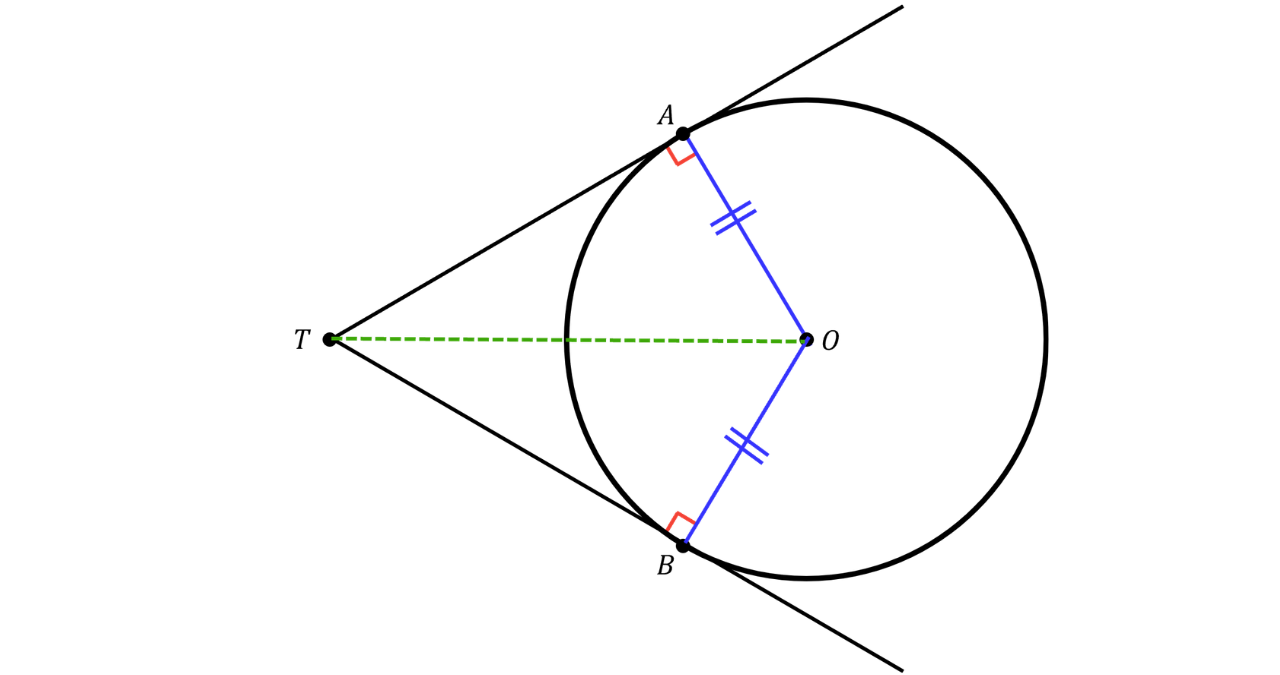
Step 2: State the conclusion.
Both triangles are right-angled, with equal hypotenuses and one other pair of equal sides, so:
Triangle is congruent to triangle by RHS.
b) Hence prove that the two tangents drawn from to the circle at and are equal in length.
Single Step: Use the congruence: corresponding sides of congruent triangles are equal, so the remaining pair of sides must be equal.
Triangle is congruent to triangle with common and
This leaves and which are the remaining sides of triangles and respectively.
must therefore be equal to the two tangents from an external point are equal in length.
Tip: this result is one of the circle theorems (see our Circle Theorems note), and this short congruence proof is exactly how it is proved. Whenever a circle appears in a congruence question, look out for radii (equal sides) and tangents (right angles).
Example 5:
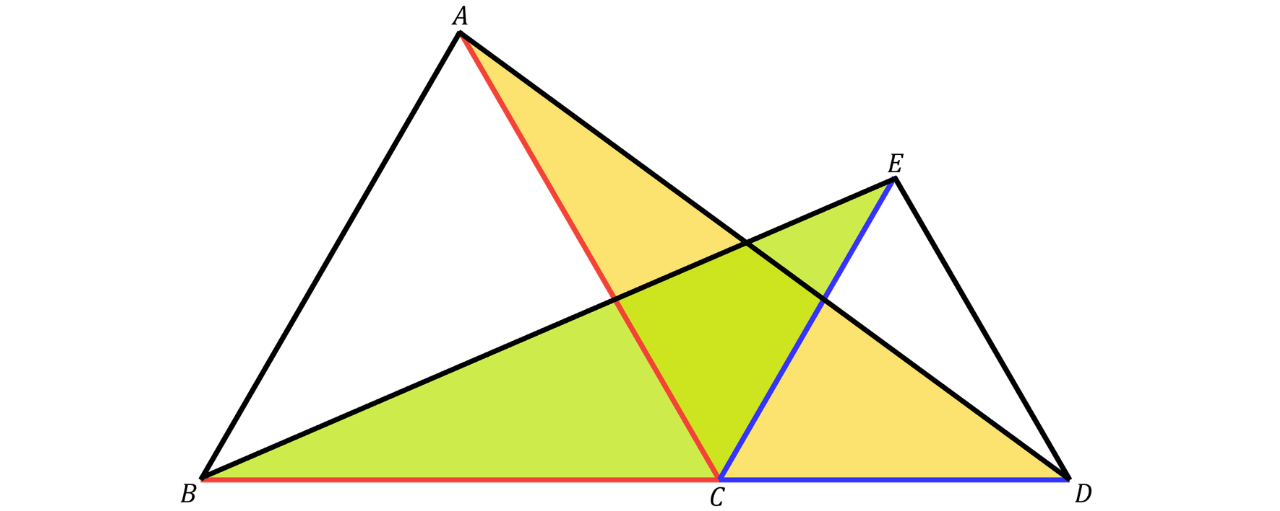
In the diagram, and are equilateral triangles, and the points and lie on a straight line.

a) Prove that triangle is congruent to triangle
Note: This is a great example to show you how congruence exam-type questions are tough for students because it is difficult to see which triangles they want you to prove are congruent. Even worse, the triangles overlap!
In the exam, some light shading with a pencil can help you see these triangles better. Here are the two triangles highlighted for clarity:

Step 1: Match two pairs of sides.
(the sides of the equilateral triangle are equal)(S)
(the sides of the equilateral triangle are equal)(S)
Step 2: Show that the included angles are equal.
Unfortunately, we cannot directly prove that the remaining sides, and , are equal so we will have to figure out an angle that is equal in both triangles.
Every angle in an equilateral triangle is so
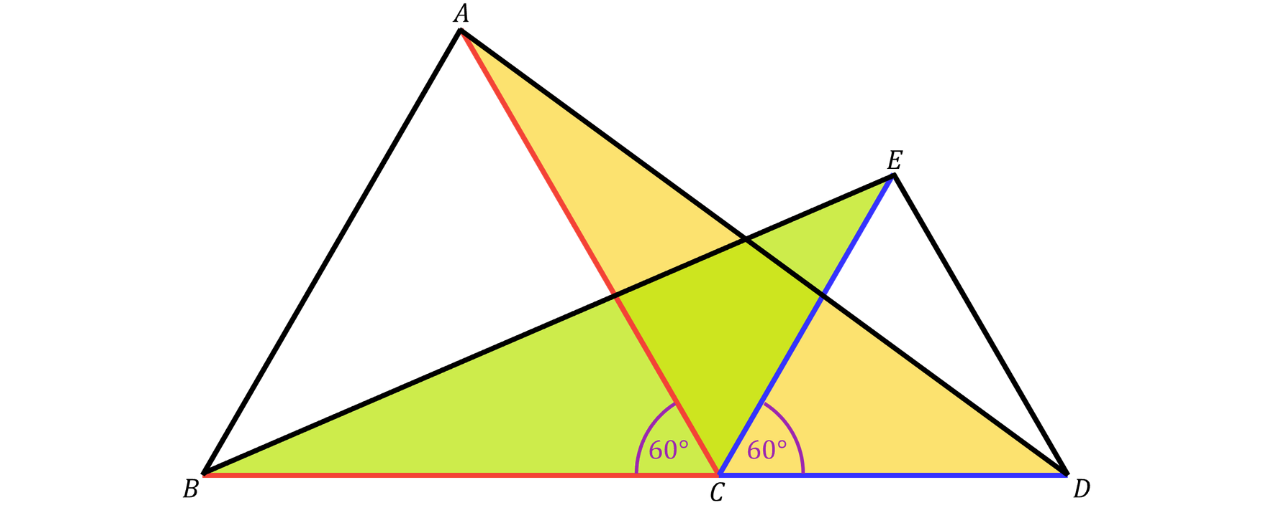
Since is a straight line, the angles along it at add up to
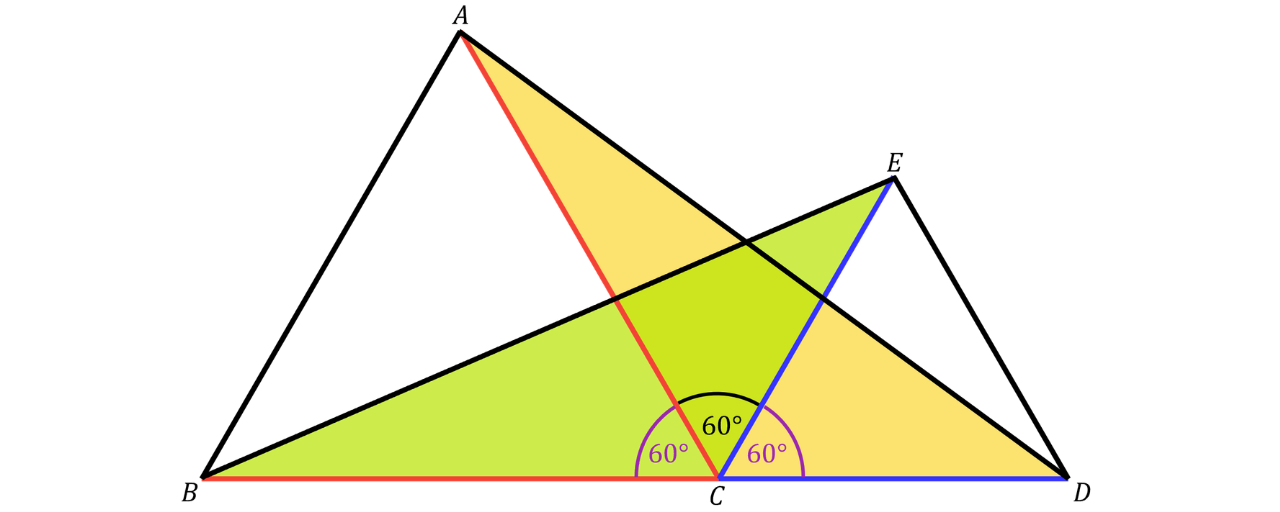
Now we can see two angles that are equal in each triangle.
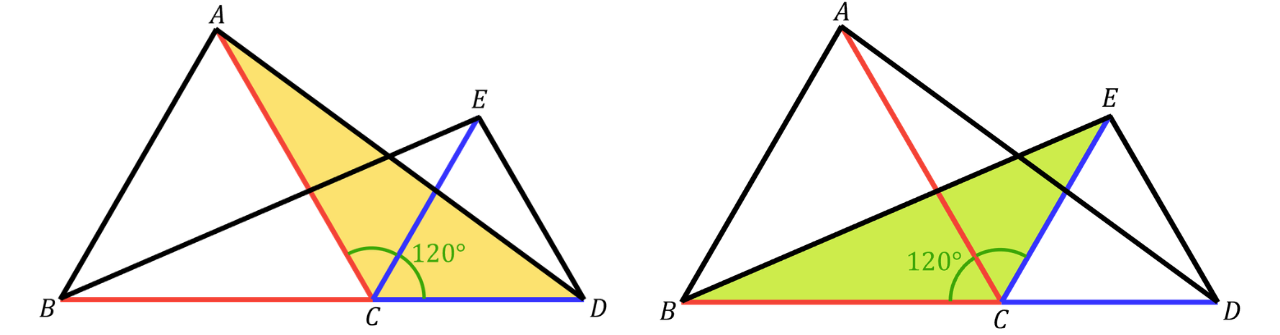
(A)
This again may be tough to see, so here is each angle in each triangle separately.
Step 3: State the conclusion.
Be careful: we wrote the facts down in the order S, S, A, but this is not the forbidden SSA condition. SSA only applies when the angle is not between the two sides. Here, the angle of is wedged between the two lengths and in triangle and in triangle it is between and so the condition we have used is SAS.
Therefore, triangle is congruent to triangle by SAS.
b) Hence, explain why
Single Step: Use the congruence: corresponding sides of congruent triangles are equal, so the remaining pair of sides must be equal.
Triangle is congruent to triangle with and Therefore, the remaining corresponding sides and in each triangle must also be equal.
Therefore,
Challenging Question